






Palm Oil Milling
Standardizing processing, maximizing recovery rates, and prioritizing circular bio-economy values at our mills.
Palm Oil Processing
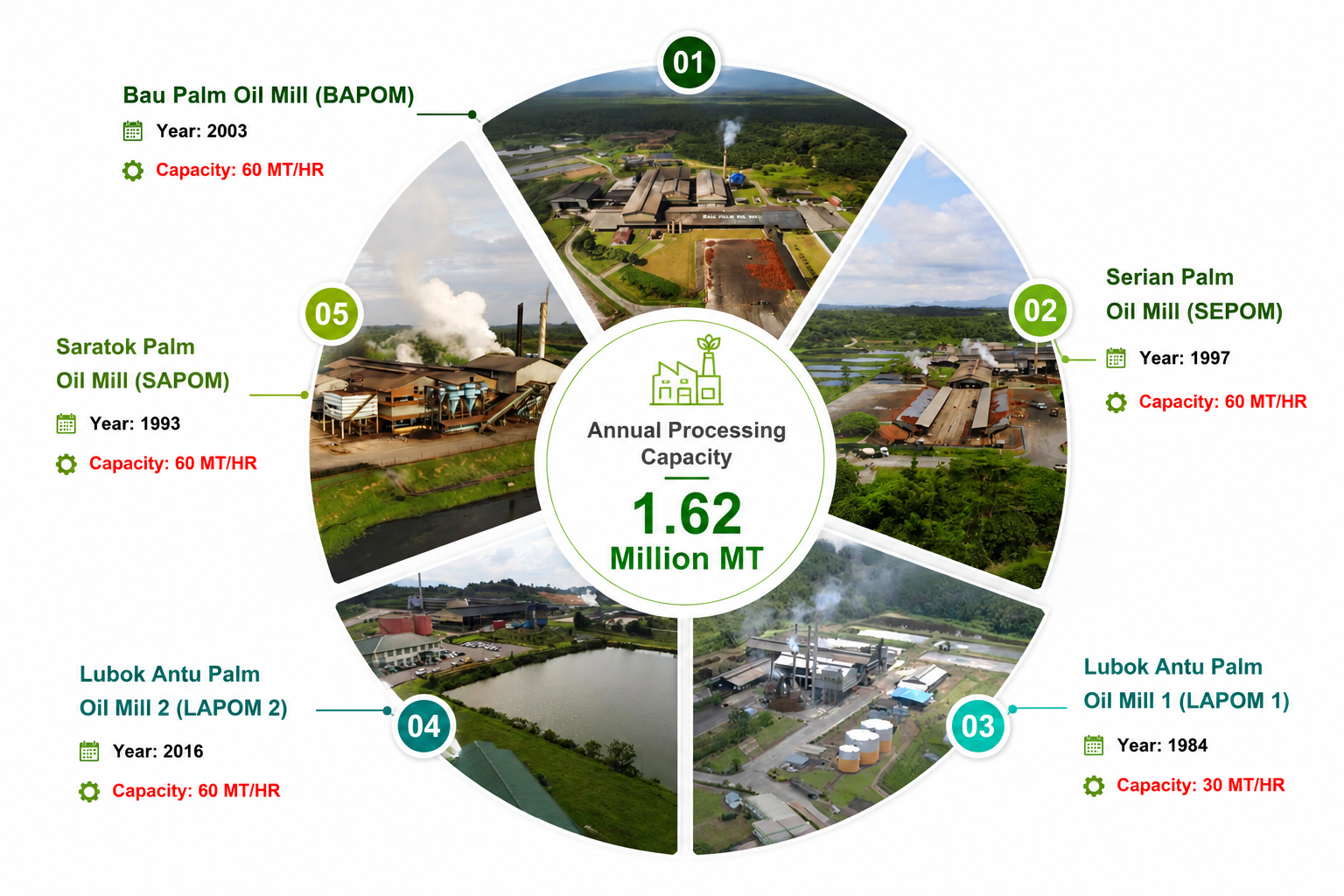
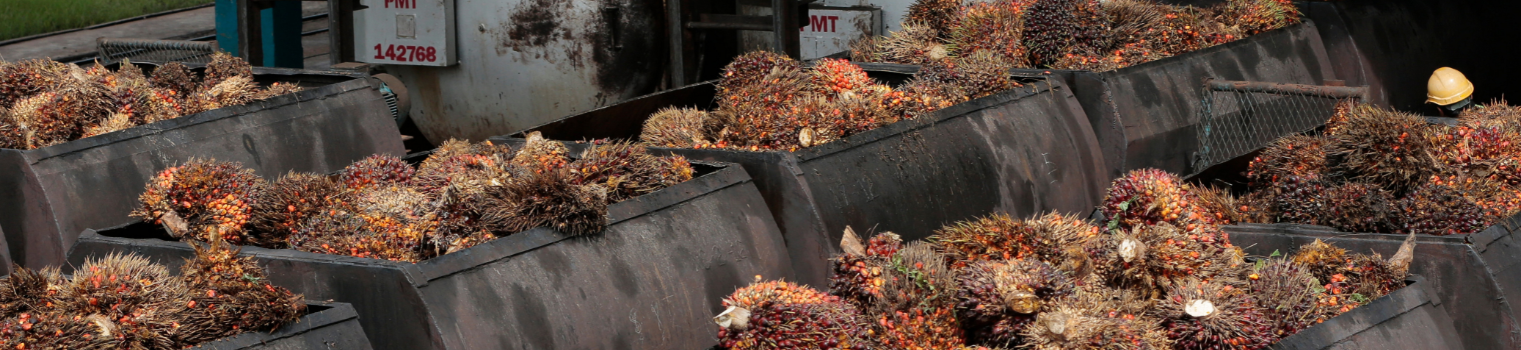
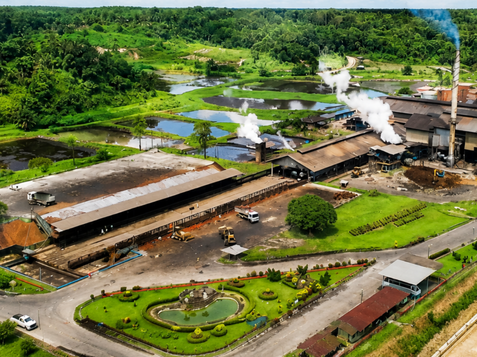
SALCRA's palm oil milling operations support its integrated agricultural value chain by processing fresh fruit bunches (FFB) into Crude Palm Oil (CPO) and Palm Kernels (PK) across five mills in Sarawak. The operations also promote resource efficiency by repurposing processing by-products, such as decanter cake and palm kernel expeller (PKE), into animal feed, contributing to more sustainable plantation and livestock operations.
The Palm Oil Extraction Process
From fresh fruit arrival to refined oil storage, tracing our high-recovery processing steps.
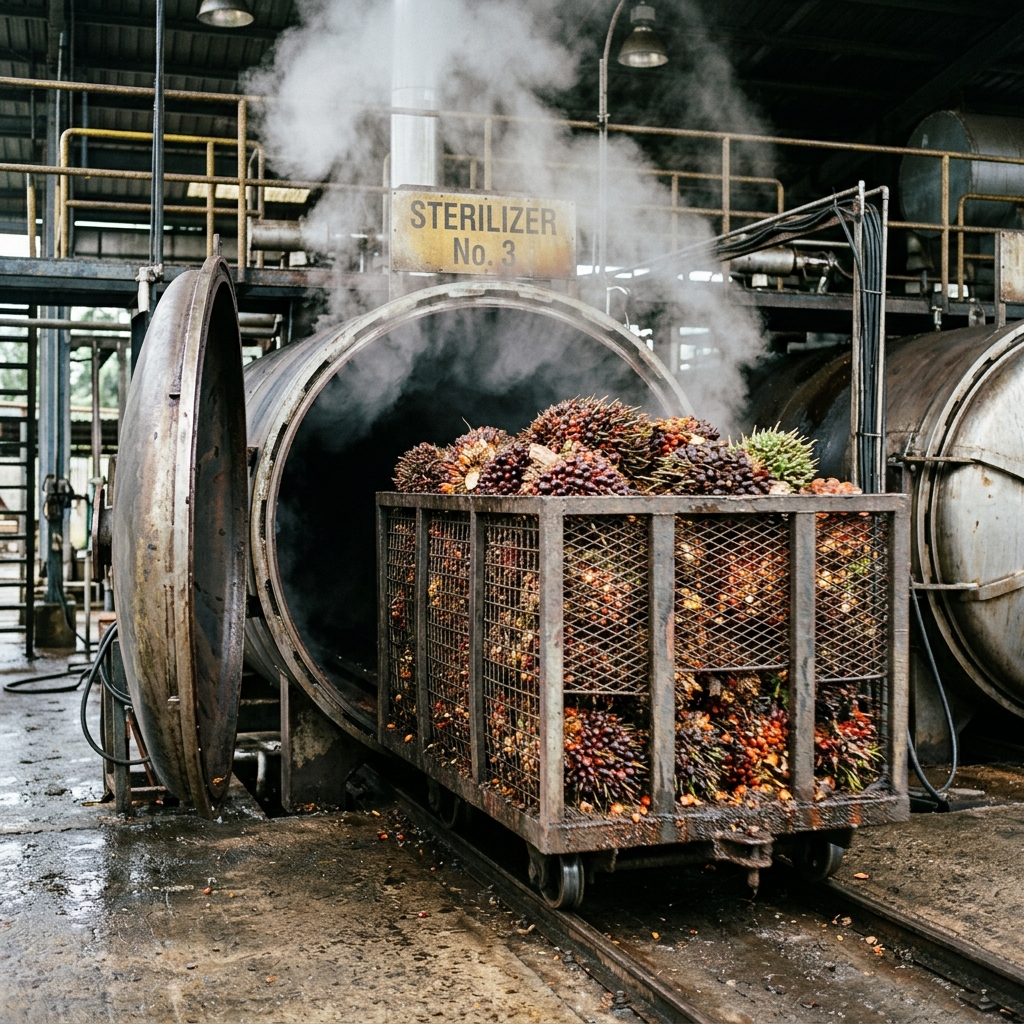
Sterilization & Threshing
FFBs are loaded into steel cages and steamed at high temperatures and pressures. This deactivates enzymes to stop FFA formation, loosens fruitlets from the bunch, and softens the pulp for subsequent extraction.

Digestion & Pressing
Separated fruitlets are cooked in steam-jacketed digesters to rupture the oil-bearing cells. Heated mashes are then fed into heavy twin-screw presses to separate liquid crude palm oil from cake fibers and nuts.
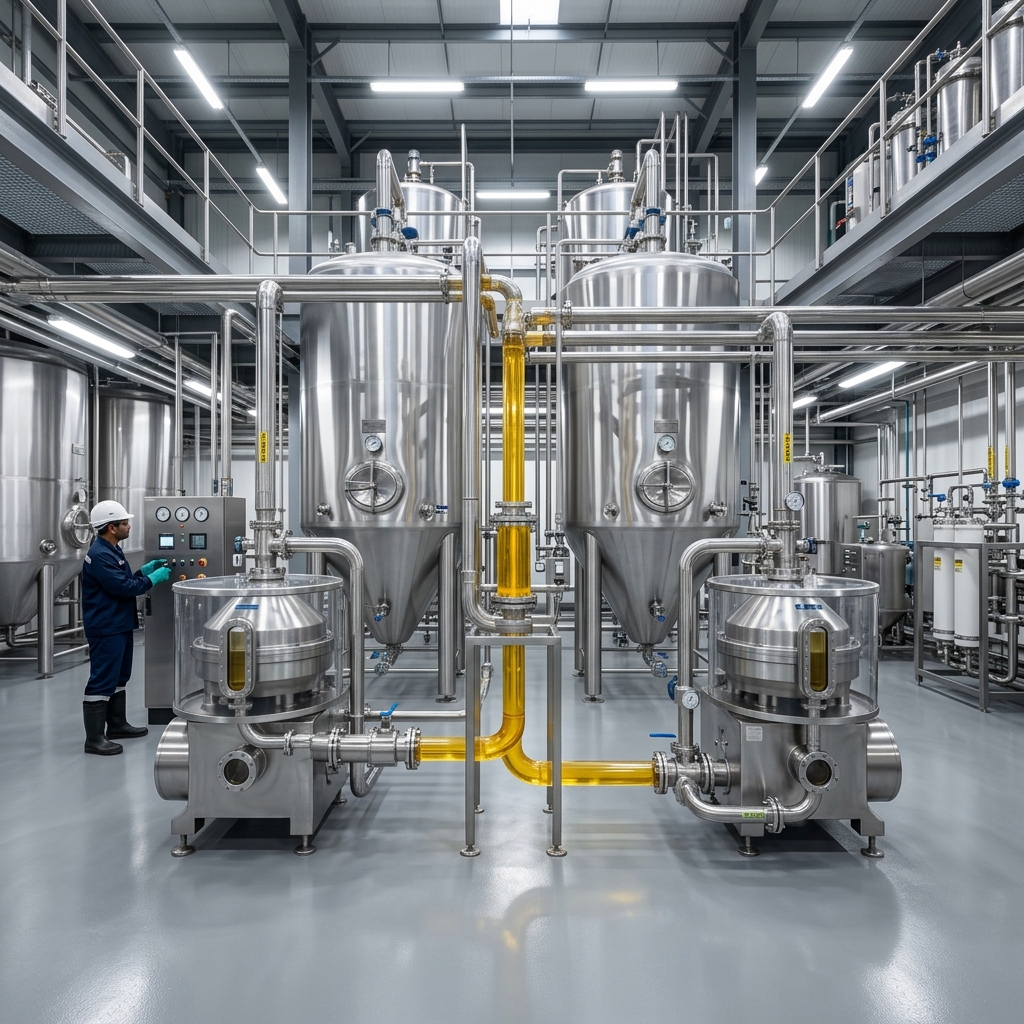
Clarification & Recovery
Crude palm oil goes through vibrating screens, sand traps, settling tanks, and centrifuges to remove water and impurities. Standardized, dried CPO is stored in large silos. Kernels are separated from fiber and dried.
Rigorous Quality Benchmarking
SALCRA mills operate specialized testing laboratories to monitor oil standards. Continuous sampling ensures compliance with global refinery criteria and local environmental codes.
FFA Level Limits
We maintain Free Fatty Acid (FFA) content below 4.0% in our CPO batches, assuring superior refining capability.
Moisture & Impurity Control
Impurities and moisture are kept strictly below 0.25% to minimize hydrolysis and oil decay during transit.
DOBI Monitoring
The Deterioration of Bleachability Index (DOBI) is constantly audited to guarantee CPO is easily bleachable.
Dispatch Inspections
Road tankers undergo heating coil inspections and sanitation audits prior to loading CPO batches.